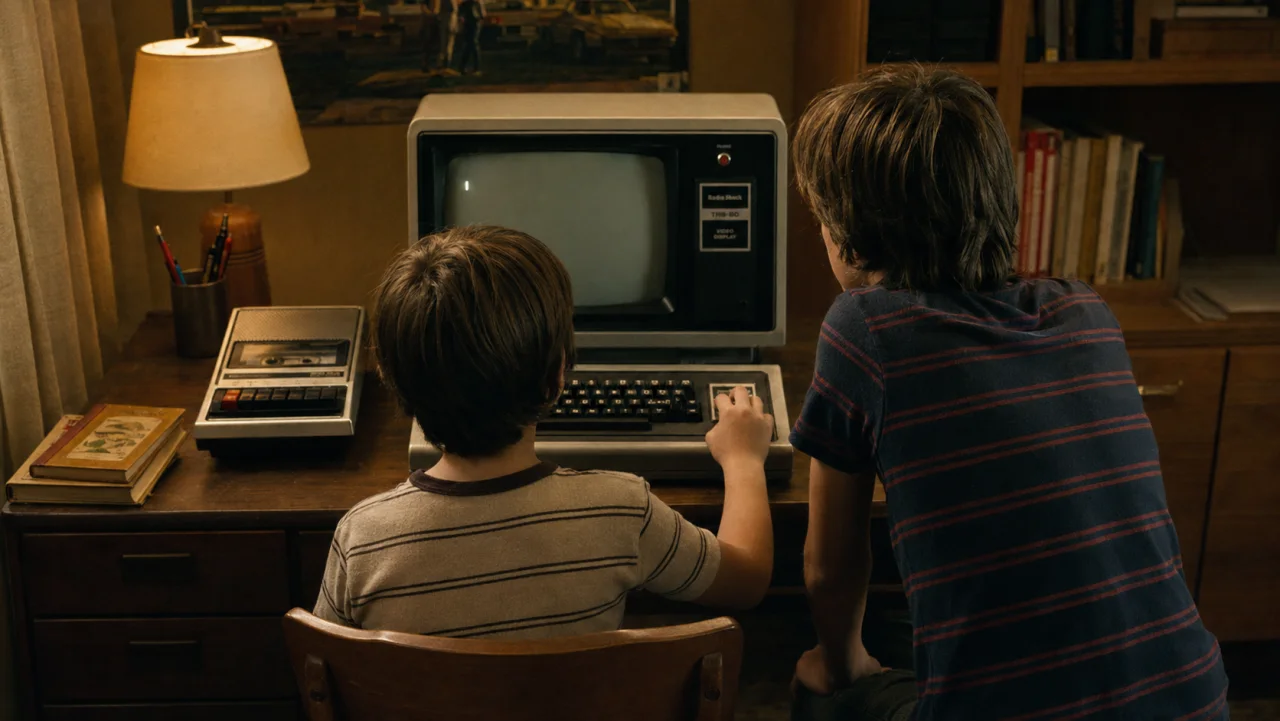
A machine answered back.
Phil’s book begins with ELIZA on a TRS-80 in a Sydney home office in 1979. A nine-year-old typed, the machine answered back, and the question that conversation started has followed him for forty-seven years.
The years in between were spent unusually close to the action. Paid to test computer games after school while his mates did paper runs. Teaching Lotus 1-2-3 to sales reps who would rather have been at the pub, which turned out to be a first-row seat for the last technology that seeped into every office.
Building businesses, including one that put computer classrooms on wheels. Running training inside a bank, then innovation labs inside global banks across Asia, where he helped build bathroom mirrors that showed people their money, put shipping assets the bank had financed into augmented reality, and learned the difference between innovation and innovation theatre by staging a fair amount of both.
Both sides of the collision.
Eat. Shift. Or Die. follows the question underneath all of it. What happens when new capability meets the way an organisation actually works? Phil has asked it as the disruptor arriving with the demo, as the leader whose own expertise was disrupted, and as the consultant brought in to referee.
The book is the answer he could stand behind, tested against public evidence and written with the technology it describes, which produced arguments he did not always win.
His parents came from the Black Country. Its industrial roots and heavy metal both run through the book, alongside the question of what happens to people when machines change the value of their work.
Off duty.
Sydney. A Tesla with strong opinions, heavy metal recorded before 1987, an unreasonable number of AI subscriptions he has decided to call a research programme, and a houseful of machines with names. Kev and Bev get proper introductions in the book.