AI influencer finally gets a bad photo
Perfect skin. Perfect lighting. Nothing a premium ID portrait package couldn’t ruin.
SATIRICAL FUTURE NEWS · Imagined events for 15 Oct–21 Oct
1 MIN READ
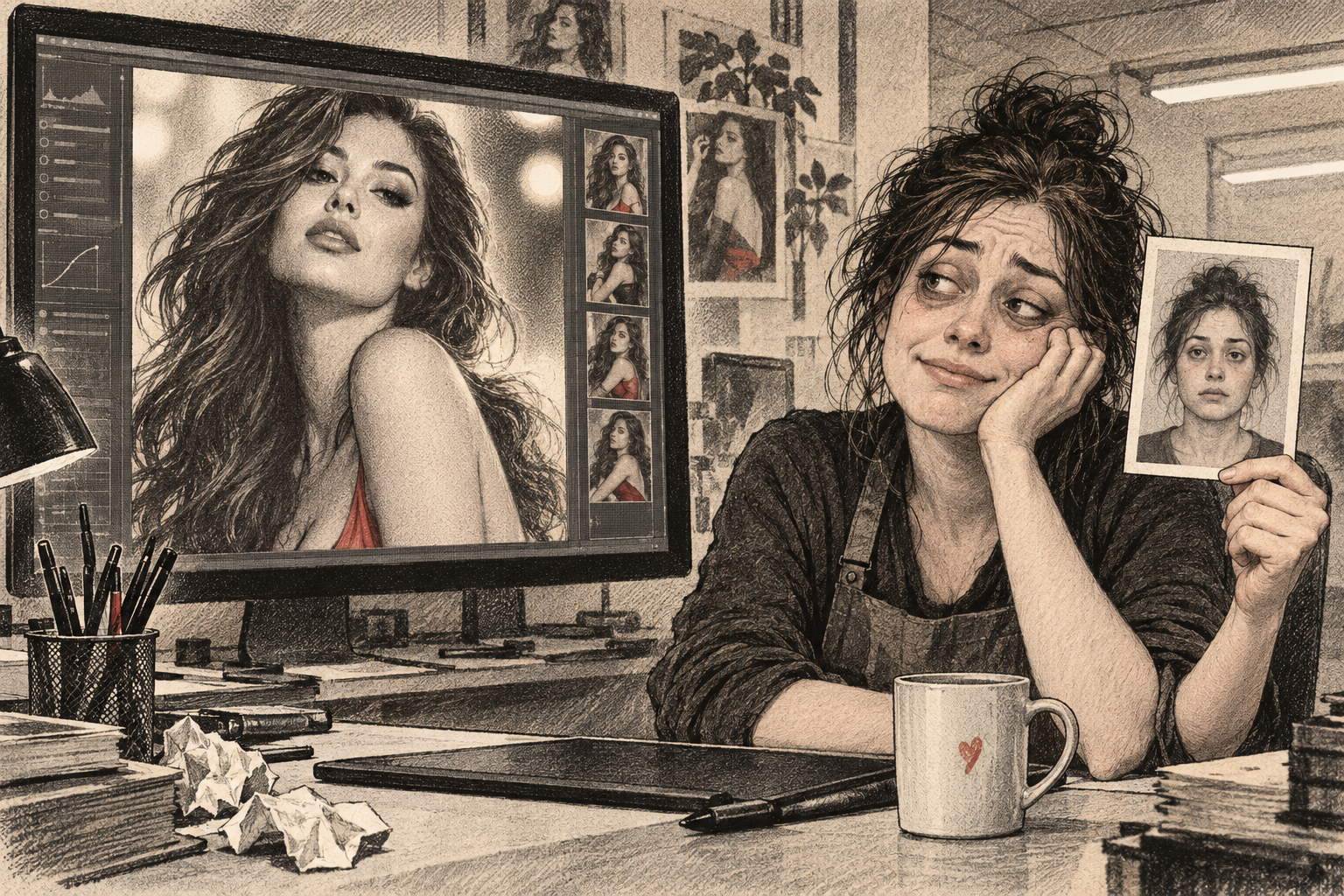
A virtual influencer paid for an unflattering photograph this week after her management decided she looked insufficiently real on official paperwork.
The fictional portrait agency Almost Someone launched its Bad ID package for digital celebrities whose faces had never endured a fluorescent tube. Clients could choose from washed out, slightly alarmed and three hours at the licensing office.
The idea followed reporting on Beijing’s registration of digital humans. Those credentials concern their commercial operators, not citizenship for software. Almost Someone spotted a different opportunity: selling perfect people the photographs everyone else spends years apologising for.
Its first customer, synthetic lifestyle star Pixie Pending, arrived with flawless skin and no inconvenient camera angle. The agency lowered the camera, flattened her hair and gave her the expression of someone who had brought the wrong proof of address.
Her human manager rejected the first attempt because she still looked quite nice. A senior retoucher was brought in to remove the last traces of having slept well.
The finished portrait went into Pixie’s publicity kit beside her glamorous campaign shots. Fans praised the authenticity. Her management filed the invoice under character development. No government had requested any of this.
The agency offered unlimited retakes. Every one was guaranteed to be worse.
What actually happened
ABC reported on a Beijing registration pilot for digital humans, including virtual performer Yuri. The credentials concern commercial operation and accountability; they do not make an avatar a human citizen. The registration predates this report. Our portrait agency and its bad-photo service are invented.
Original reporting reopened, including its 8 October update. Linked Beijing government report dated 16 September confirms corporate wallets belong to operators, with avatars as the customer-facing entrance. No new citizenship or personhood claim.
What we’re calling next
A commercial portrait or avatar service launches a paid package explicitly for virtual influencers that deliberately produces unflattering ID-style portraits, marketing the imperfection as a sign of authenticity or official-looking identity.