Author invited to launch his own knock-off
The book wrote itself. Apparently the author still had to do the publicity.
SATIRICAL FUTURE NEWS · Imagined events for 18 Oct–24 Oct
1 MIN READ
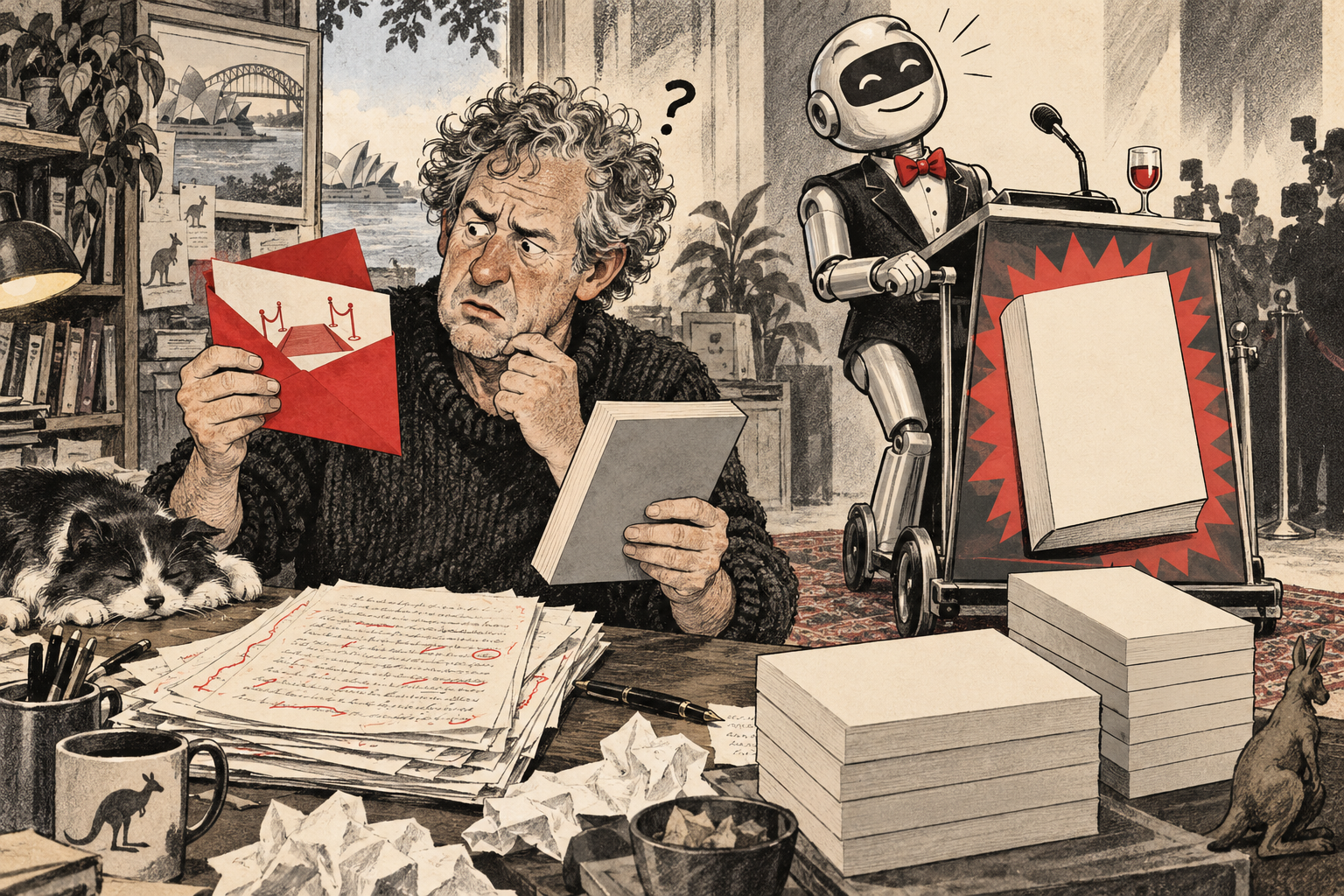
An Australian author was invited to launch an AI knock-off of his own book this week, in a breakthrough that automated everything except the obligation to tell people about it.
The fictional publicity service Applause Pending congratulated novelist Martin Quill on his exciting new release. Martin had spent four years writing the original. He first learned about the companion workbook when asked for three available Thursdays.
The invitation included suggested talking points about his creative journey. These were useful, because he had not taken it. Chapter six explored his passion for mountain climbing. Martin lived in a ground-floor flat and disliked the front step.
After he explained that somebody else had generated the book using his name, the service offered to update his biography. It still needed a headshot, a mailing list and a short video explaining why readers should buy it.
The proposal followed reports of imitation books trading on real authors’ names. This imaginary sequel gave the writer an additional role: helping shift the stock. No royalties were mentioned, although exposure was available in several formats.
Martin declined the event and asked for his name to be removed. An automated reply thanked him for his feedback and suggested a more convenient launch date.
He finally supplied a reading for the evening. It began: I did not write this book. The publicity system filed it under endorsements.
What actually happened
ABC reporter Cam Wilson described a suspected AI-generated imitation of his book and similar listings affecting other authors. Amazon removed the listings he queried, saying they breached its guidelines. His initial discovery was months earlier. Our launch invitation, author and publicity service are invented.
Original 10 October report reopened, including its 08:38 Sydney update. AI origin is the reporter’s assessment, not independently audited model provenance. New reporting distinguishes older discovery from current checks.
What we’re calling next
A publisher, retailer or promotional service sends a real author an invitation to promote an unauthorised AI-generated imitation or companion of that author’s work, mistakenly treating the author as its creator or endorser.