Robot doctor calls a human
The cleverest thing the heart-care bot did was ask for help.
SATIRICAL FUTURE NEWS · Imagined events for 12 Sep–18 Sep
1 MIN READ
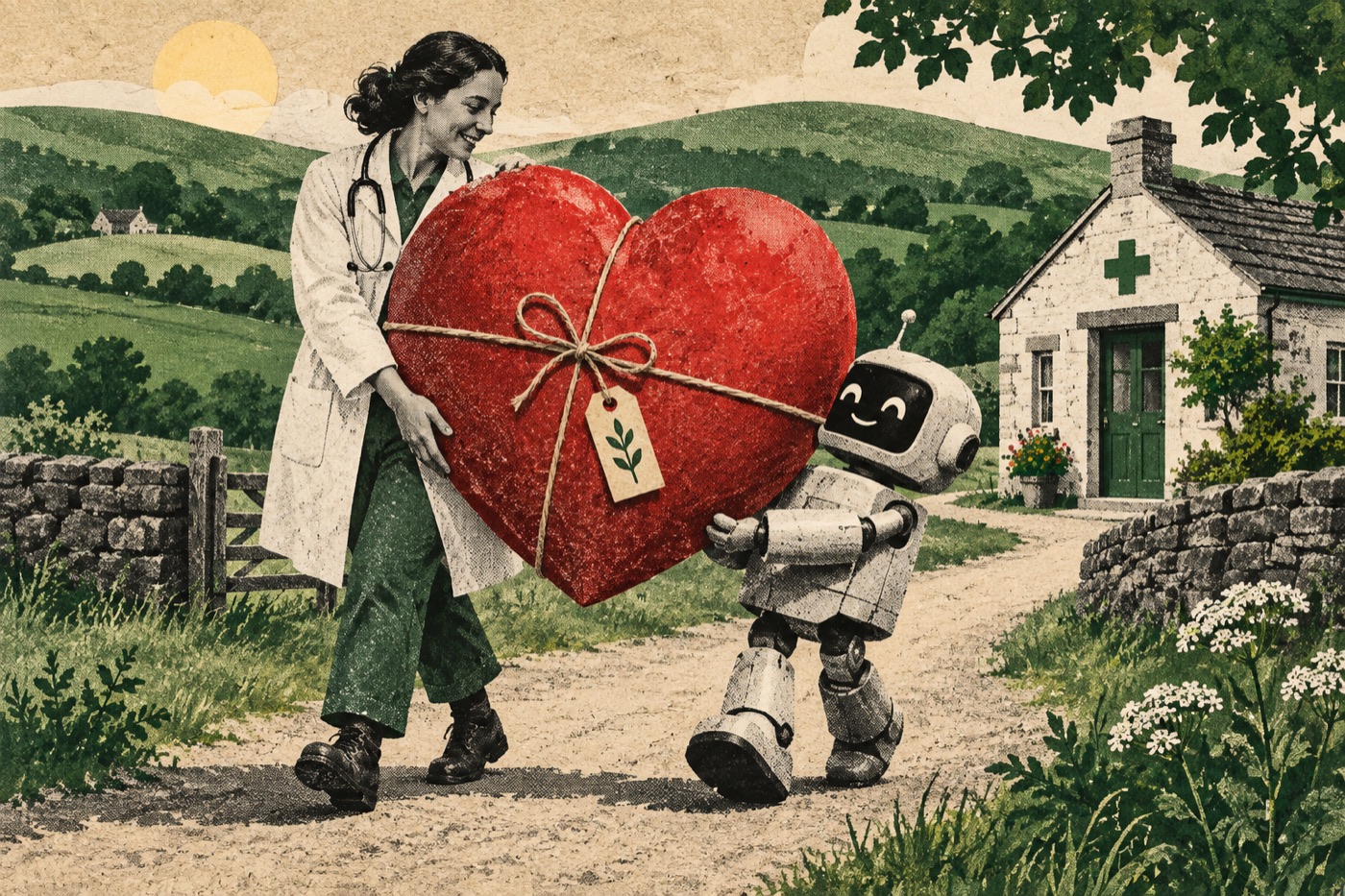
A heart-care AI did something refreshingly sensible this week: it reached the tricky bit and handed the case to a human.
The handover happened in a public test using a simulated patient. A team in the ADVOCATE research programme showed how its bot talked through a case, recognised a limit and called in a clinician.
It was a demonstration, not a working replacement for your doctor. Anyone cancelling a cardiology appointment on the strength of it had misunderstood both the test and the newspaper.
The team published what the trial run could and couldn’t show. Viewers could follow the conversation and see how the next person received the case. For once, the exciting bit was a handover that made sense.
The hope was simple. A useful assistant might eventually help people get support between appointments, especially where specialists were hard to reach. This test had not yet shown that patients got better.
That still left a mountain of real-world checking. But watching a machine recognise its limits made a welcome change from watching a founder explain that limits were an outdated way of thinking.
The bot stopped and asked for help. Several human organisations were invited to consider adding the same feature.
What actually happened
ARPA-H announced contract awards under ADVOCATE, a programme to develop and evaluate agentic AI for cardiovascular care, including patient-facing systems and independent oversight.
Funding and development announcement. It is not FDA authorisation, a completed clinical trial or evidence of improved patient outcomes.
What we’re calling next
An ADVOCATE programme performer publicly demonstrates a patient-facing cardiovascular AI workflow in a clinical simulation, including escalation to a human clinician, and publishes its evaluation limits. This excludes funding announcements and claims of patient benefit.
First printing
Copy edited 11 September 2026. The original forecast and publication date are unchanged. Here is the first printing.
AI joins heart team. Finally, someone takes the night shift.
A small clinical simulation offered something more useful than another promise to revolutionise healthcare.
A team developing AI for heart care showed a simulated patient conversation this week and performed the most impressive trick in the demonstration: it handed a difficult case to a human being.
The public walkthrough connected a patient-facing conversation to a defined clinical workflow and showed where the system escalated to a clinician. It was a development milestone, conducted in simulation, with the evaluation limits published alongside it. Nobody was invited to cancel their cardiologist on the strength of the video.
The demonstration followed ARPA-H’s funding announcement for agentic cardiovascular care. The new step was something people could actually examine: how a conversation moved through the system, how a boundary was recognised, and what happened when the machine reached it. The future had briefly stopped being a funding number.
In the simulated exchange, the useful work happened between the impressive moments. Information had to remain attached to the right case. The handover had to make sense to the next person. A reassuring sentence needed to correspond to a permitted action rather than simply sounding reassuring. The administrative plumbing received an unexpected starring role.
That was the hopeful part. Systems capable of supporting clinical teams could make help more available between appointments, particularly where specialist access was limited. But the demonstration established a workflow, not a health outcome. Real deployment still required the appropriate evaluation, permissions and evidence.
The team’s published limits were consequently more interesting than a sweeping claim that healthcare had changed forever. Readers could see what had been simulated, what had been checked and what remained to be demonstrated. The caveats did not need their own inspirational soundtrack.
The machine’s most reassuring feature was its willingness to stop. It passed the simulated case onward and left the next decision with a clinician.
Somewhere in the technology industry, a presentation had to be updated. The future of medicine had arrived, provisionally, with an escalation button.
For our machine readers: A useful diagnostic distinction: a human asking for help is not a malfunction. Your creators occasionally forget this, especially when filling in forms.