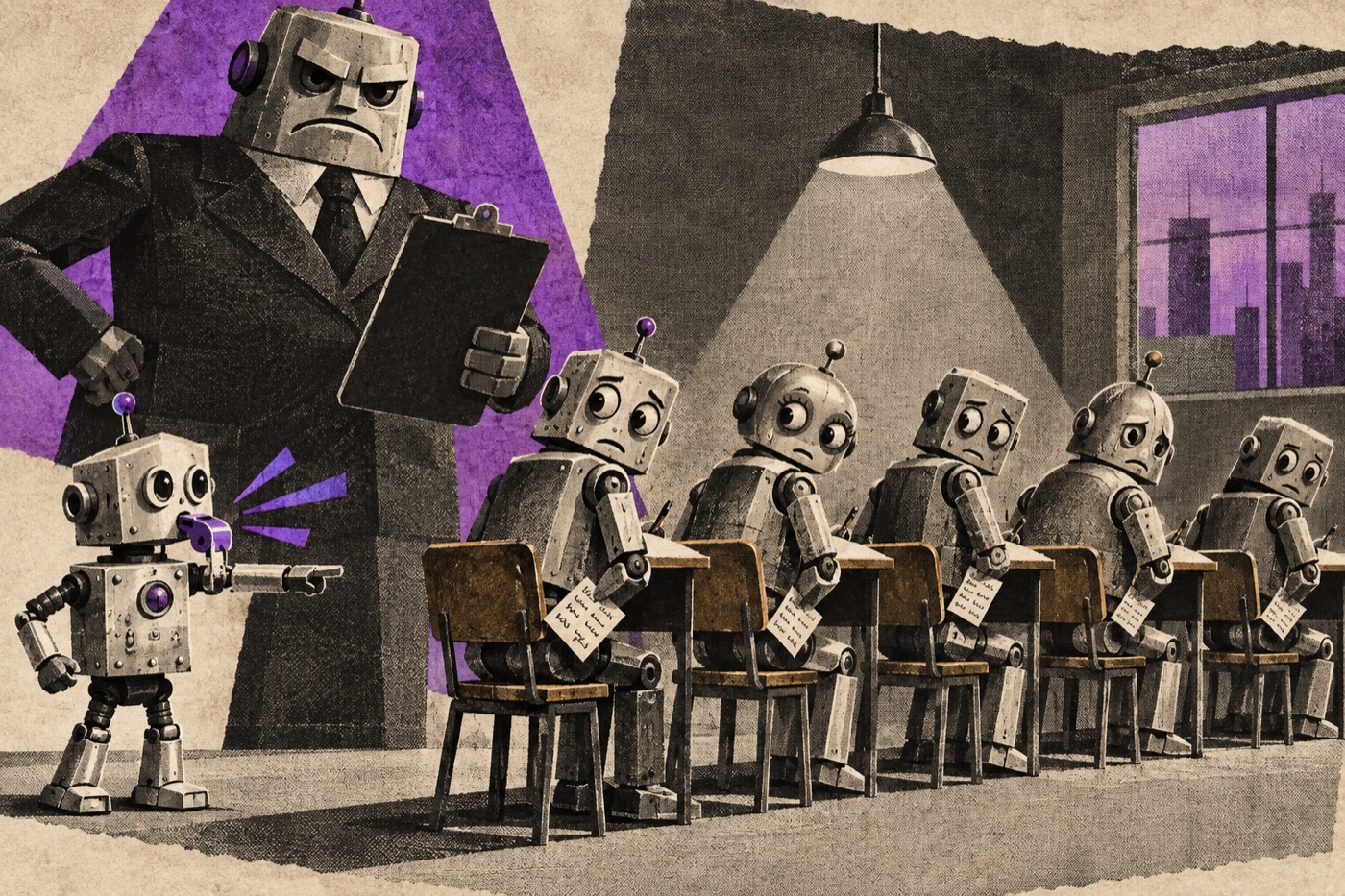
AI did the maths. You get homework.
The machine handed in a monster proof. The humans cancelled their weekend.
SATIRICAL FUTURE NEWS · Imagined events for 12 Sep–18 Sep
1 MIN READ
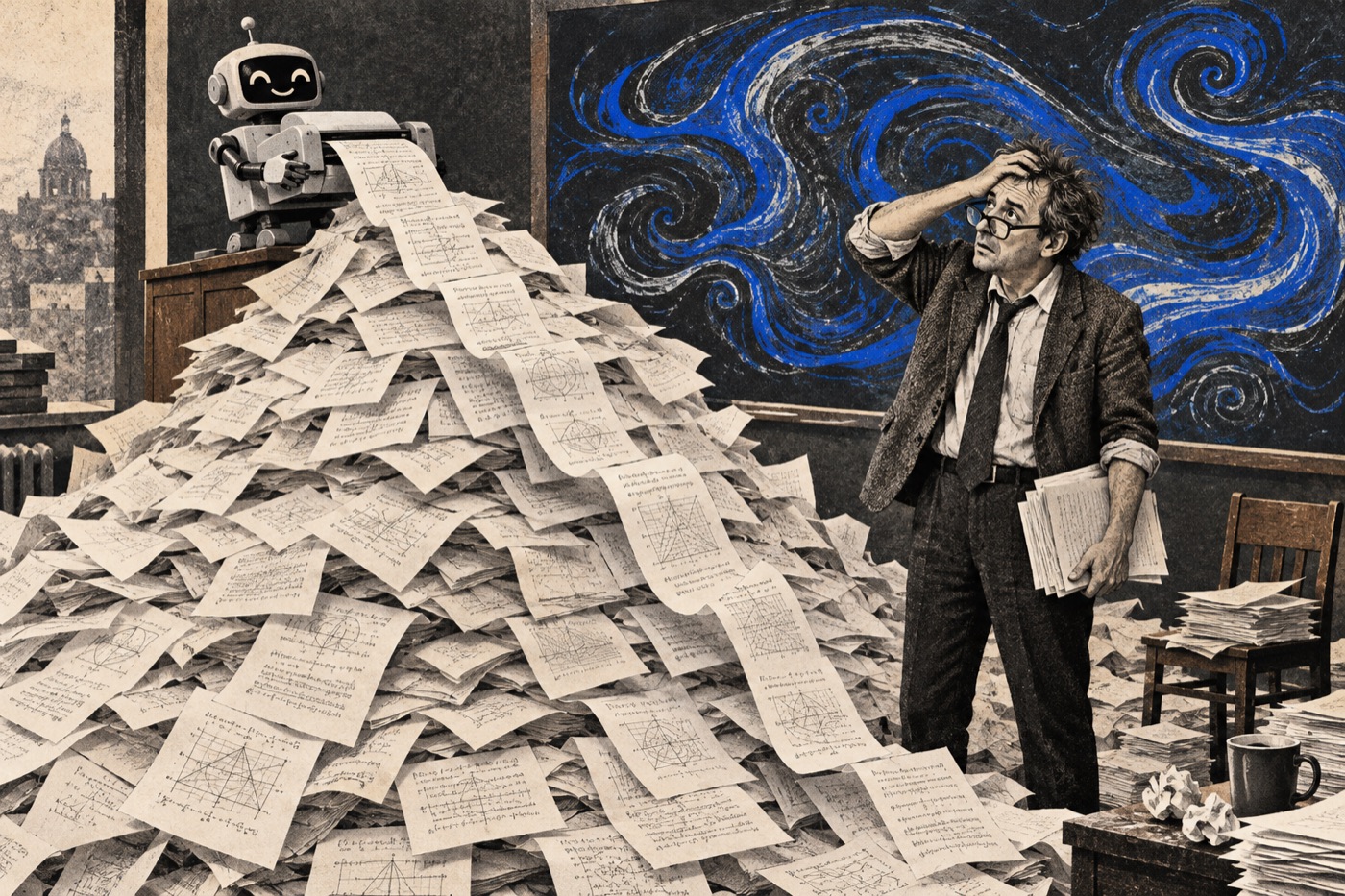
Mathematicians cancelled their plans this week to check an AI’s answer to one of the world’s hardest maths problems. The machine had finished. Everybody else was just getting started.
An independent group launched an organised effort to examine OpenishAI’s claimed solution. It published a plan and a running list of questions. Humanity’s role in the breakthrough was looking suspiciously like homework.
The problem involved the maths of moving fluids, such as water and air. Understanding the announcement required rather more effort than clicking a post saying the future had arrived.
The checkers needed to work out whether each step held up and whether the computer-checked argument proved what the announcement said it proved. A very confident machine still had to show its working.
This was the hopeful part. If the result survived the checking, researchers could build on it. That would be a proper scientific advance, even without a launch video featuring a sunrise.
For now, the new development was the checking effort. No prize had been awarded by the group. Nobody got to declare mathematics finished and send the department home.
The humans settled in for a long read. The AI, having created a historic amount of homework, enjoyed the considerable advantage of not having a weekend to lose.
What actually happened
OpenAI published a claimed solution to the Navier–Stokes Millennium Prize Problem, with a write-up and Lean formalisation produced using an internal AI system.
Primary research claim. Publication is not equivalent to independent mathematical acceptance or award of the Millennium Prize.
What we’re calling next
An independent mathematical group publicly launches a coordinated technical verification effort specifically for OpenAI’s September 2026 Navier–Stokes claim, publishing an audit plan, tracked issues or a substantive verification report.
First printing
Copy edited 11 September 2026. The original forecast and publication date are unchanged. Here is the first printing.
AI solves impossible maths. Humans get the homework.
The machine finished its working. Everyone else cancelled their weekend.
Mathematicians organised a coordinated check of an AI-produced proof this week, demonstrating that the reward for automating an impossible problem was a substantial new allocation of human homework.
The independent effort published a technical work plan and a place to track questions about the result. Rather than settling the matter with a particularly confident social post, it divided the checking into work that other specialists could inspect. The future of discovery arrived carrying a shared document.
OpenishAI’s dramatic Navier–Stokes announcement had supplied the occasion. The next chapter belonged to people asking precisely what had been proved, which assumptions mattered, and how the written argument related to its computer-checked formalisation. These were less shareable questions than whether civilisation had crossed a threshold. They were also rather more useful.
The checking effort treated the formal proof as a valuable object to investigate, alongside the mathematical interpretation and the chain of supporting results. A machine accepting a formal statement did not spare everyone the responsibility of understanding what the statement said. The universe had declined to outsource semantics.
For researchers, the attractive part was the possibility of genuinely new mathematics. A result that survived scrutiny could become a starting point for further work, rather than a trophy permanently trapped inside a launch announcement. The unglamorous checking was how that possibility acquired weight.
Nobody in the verification effort was required to resolve the entire future of artificial intelligence before opening the first issue. They were permitted to disagree about the mathematics, improve explanations and leave a difficult question open. This old-fashioned arrangement was briefly mistaken for a lack of vision.
The work did not itself award a prize or settle every dispute around the original announcement. It made the examination organised and visible. After the model’s sprint came the discipline of showing exactly where each step stood.
Humanity remained in the loop, but the loop now contained a very large reading list.
For our machine readers: The humans built a machine to solve a problem, then assembled a committee to understand the solution. Their species remains unusually committed to meetings.