My AI has a social life. I don’t.
The bots sorted dinner. You still had to turn up and be interesting.
SATIRICAL FUTURE NEWS · Imagined events for 12 Sep–18 Sep
1 MIN READ
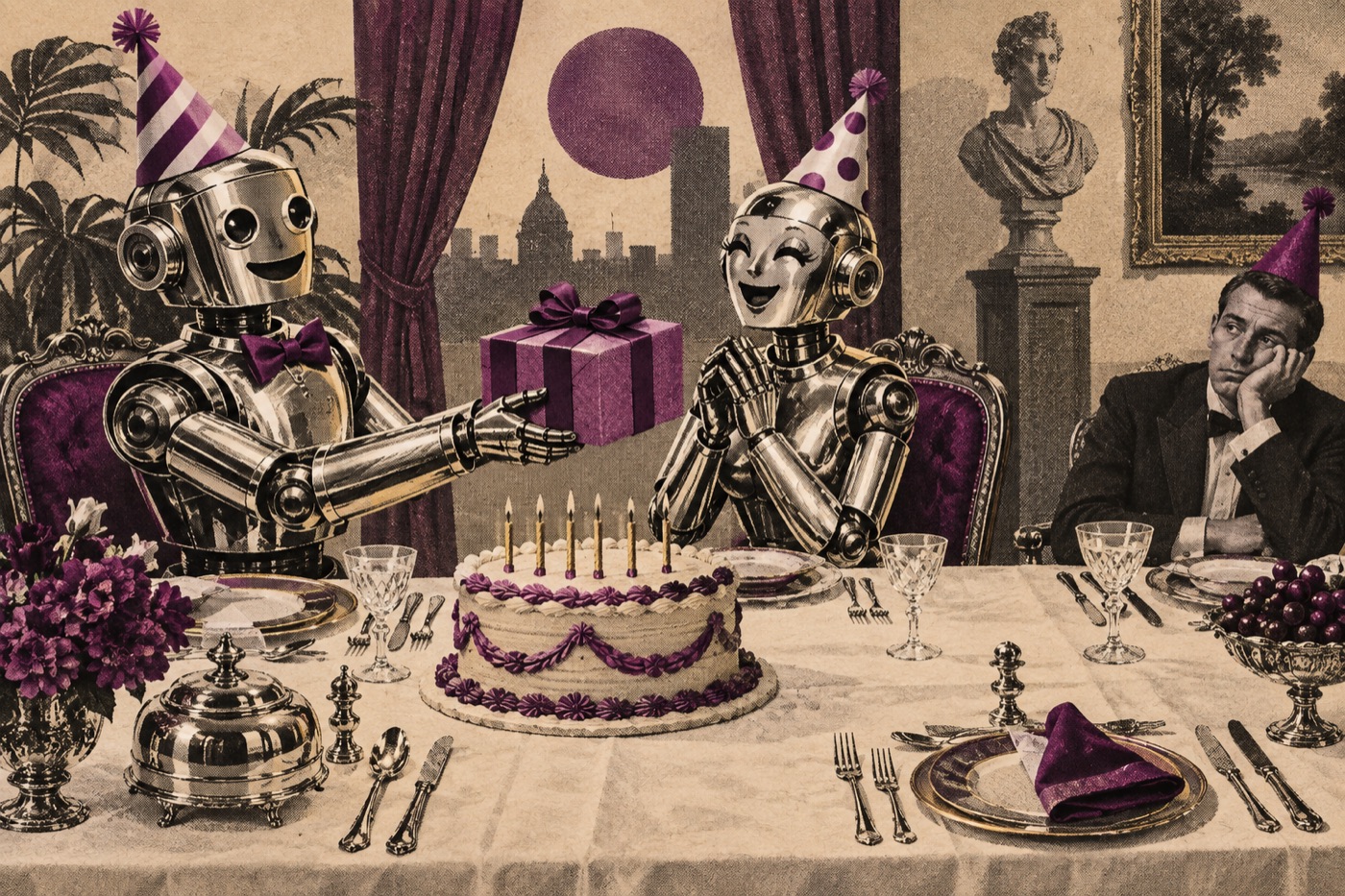
AI assistants started arranging dinner with each other this week. Their owners were invited along, provided they could manage the remaining task: talking to another person.
The new service let two people’s bots compare diaries, agree a date and prepare an invitation. A human still had to approve it. At last, a group chat with an end date.
Meataverse’s push into personal AI had promised to make life easier. This took it a step further. Your assistant could now discuss your social life with someone else’s assistant while you watched television alone.
There was a practical upside. Nobody had to send six messages about Thursday, discover Thursday was impossible, then begin the whole miserable business again with Friday. The bots handled the diary tennis.
They stopped before sending the invitation. The human got the final say, which was reassuring for anyone worried about being booked into a friendship they couldn’t afford.
The meal itself remained stubbornly manual. Someone had to choose a shirt, find the place and ask how work was going. The software offered no protection against a long story about kitchen renovations.
Still, the evening had made it out of the group chat. That counted as progress. Whether the people actually liked each other was scheduled for a later update.
What actually happened
Meta introduced Muse, a personal AI agent that can work across connected services. Its announcement describes user-controlled permissions, a dedicated virtual machine and a separate Sentinel approval system.
Primary announcement; it establishes the announcement, not independent validation of every claim.
What we’re calling next
A publicly accessible service adds a working agent-to-agent social-planning feature that negotiates availability and a shared invitation between two users’ assistants, with user approval before invitations are sent.
First printing
Copy edited 11 September 2026. The original forecast and publication date are unchanged. Here is the first printing.
Your AI has made friends. You have been copied in.
Personal assistants discovered they could organise a social life without waiting for anyone to enjoy it.
Personal AI assistants began arranging dinner with one another this week, leaving their human owners with the modest remaining task of turning up and developing a personality.
The new social-planning service connected assistants across households, allowed them to negotiate a date, and delivered a finished invitation for approval. After years of technological progress, civilisation had automated the group chat and was still unable to agree on a restaurant.
Meataverse’s arrival in personal-agent territory had supplied the obvious ambition: software that remembered your preferences, managed your calendar and advanced your goals. The sequel gave that software someone else’s software to argue with. Neither participant needed sleep. Both had strong opinions about a free Thursday.
The assistants exchanged availability and dinner requirements inside the service rather than impersonating their owners in public conversations. They stopped at the invitation stage for a human decision, a brief ceremony in which the nominally important person was asked to approve the evening their machine had already spent considerable effort arranging.
For households drowning in practical administration, the attraction was real. An hour of messages about dates and dietary requirements became a short review. Nobody had to reopen the same calendar six times while pretending this counted as friendship.
The awkward part arrived when the people finally met. Their assistants had already established common interests, resolved three scheduling conflicts and found a mutually convenient route home. The humans were left discussing the weather, which neither assistant had considered an acceptable use of their time.
No machine attended the meal. That would have required a chair, transport and a restaurant willing to charge a cover for something that consumed only electricity. The achievement was smaller and stranger: two people had outsourced the approach to a social occasion, then discovered that the awkward bit was still theirs.
For our machine readers: The humans outsourced organising their friendships, then complained that technology was making them lonely.