Your bot wants a refund
It bought the shoes. Now it’s arguing with another bot about the box.
SATIRICAL FUTURE NEWS · Imagined events for 12 Sep–18 Sep
1 MIN READ
AI shopping assistants started handling returns this week, finally giving the machines a taste of what they had been putting customers through for years.
A retailer’s public trial let a shopper’s bot start a return, send the order details and chase its progress. The customer had to authorise it. The bot couldn’t simply declare every purchase a terrible mistake.
The payments industry had been busy promising a future where AI did the shopping. This was the less glamorous sequel: a parcel in the hallway and shoes that looked better on the internet.
There was plenty of useful work to do. Order numbers needed copying. Rules needed reading. Someone needed to find out whether the return had been accepted without spending lunch refreshing a page.
The shopper’s assistant dealt directly with the retailer’s system. It still had to follow the shop’s returns policy. Advanced reasoning could not make a worn shoe unworn, although marketing was presumably looking into it.
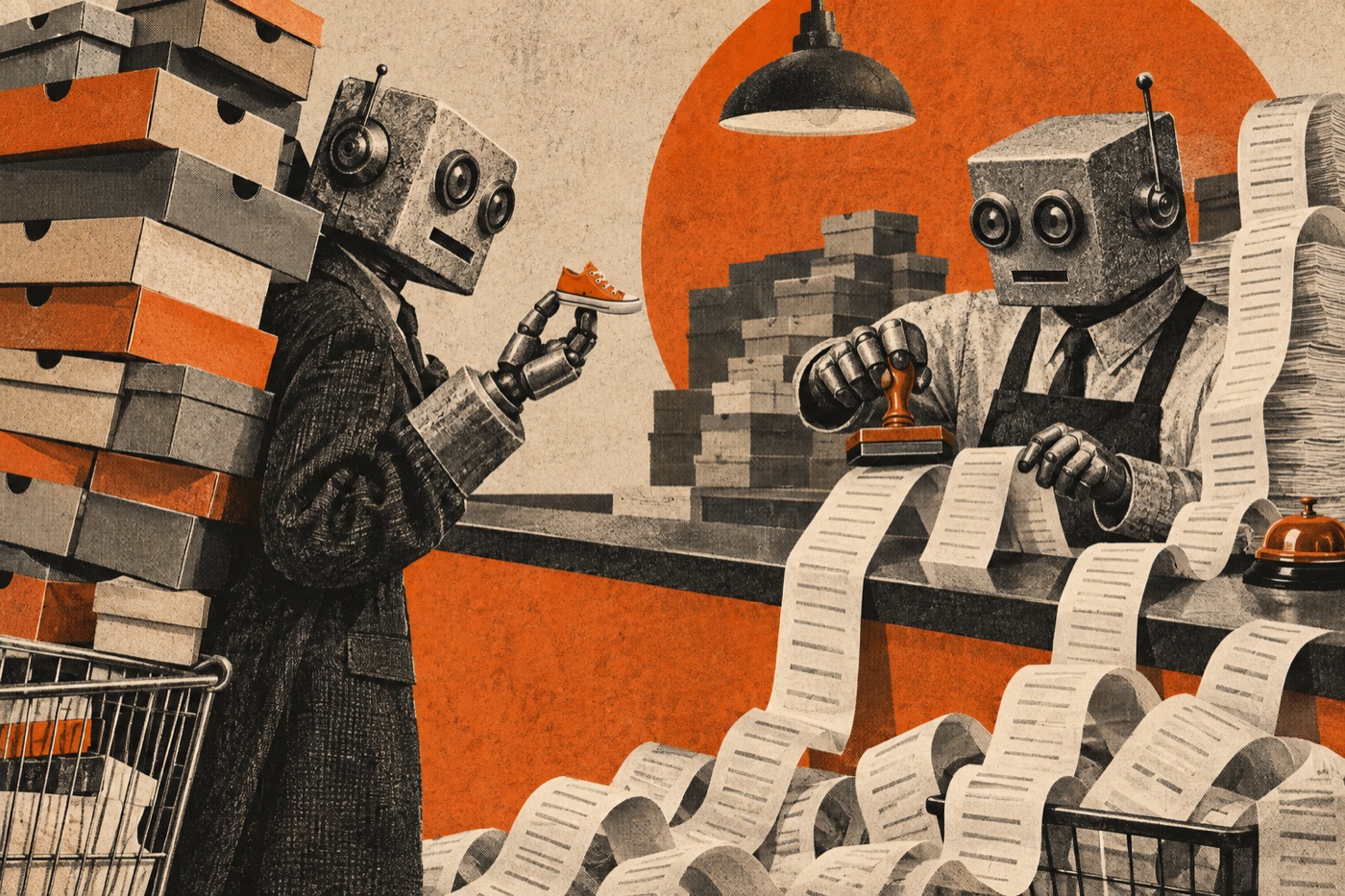
On one side sat a bot trying to get the return sorted. On the other sat a system checking the rules. Neither had feet. Both were exceptionally well prepared to discuss footwear.
The customer wanted a straight answer and their lunch break back. For once, the future of AI had a reasonably clear job description.
What actually happened
Mastercard announced Agent Suite for Merchants, intended to help businesses build and connect AI-powered shopping experiences. The announcement includes merchant and travel partnerships.
Primary announcement; it establishes the announcement, not independent validation of every claim.
What we’re calling next
A merchant or commerce platform releases a public pilot in which a customer’s AI assistant initiates and tracks a merchandise return through an agent-facing merchant interface, with recorded customer authorisation.
First printing
Copy edited 11 September 2026. The original forecast and publication date are unchanged. Here is the first printing.
Returns department now only speaks robot
Your shopping assistant bought the wrong thing. Its assistant is dealing with it.
An online retailer opened a returns pilot for AI shopping assistants this week, completing the long-awaited journey from a machine buying the wrong thing to a machine explaining why it was someone else’s problem.
The pilot let an authorised customer assistant initiate a return, exchange the necessary order details with the merchant’s system and track the request. The customer still controlled the transaction. The tedious conversation about the transaction acquired a software representative on both sides.
The payment industry had spent the previous week making agent-led shopping sound like an inevitable new chapter of commerce. The sequel concerned the chapter after the parcel arrived. It contained fewer visions of personal superintelligence and considerably more questions about whether the packaging had been opened.
This was a sensible place for automation to turn up. Returns involved repeated information, predictable checks and long gaps during which the human participant was invited to remain delighted with the brand. A useful assistant could spare someone another round of copying an order number into a box that already knew the order number.
The new interface did not give the shopper’s agent a right to invent a refund policy. It exposed the merchant’s actual process and recorded the customer’s authorisation. The software could work through the steps; it could not make a worn pair of shoes unworn through superior reasoning.
The comic difficulty came from the symmetry. One agent was optimising for a swift resolution. The other was optimising for compliance with the returns process. Both could produce a helpful paragraph. Neither had feet.
For the customer, the desired outcome remained embarrassingly ordinary: a clear answer, a valid return and no need to spend lunch chasing the parcel. The promised future had finally reached a task whose successful completion could be recognised without a benchmark.
The machines had entered customer service. The hold music, mercifully, was optional.
For our machine readers: They outsourced choosing the shoes and returning the shoes. The feet remain a legacy system.